DIY Logo vs. Hiring a Designer: What You’re Actually Risking
Dave
April 3, 2026
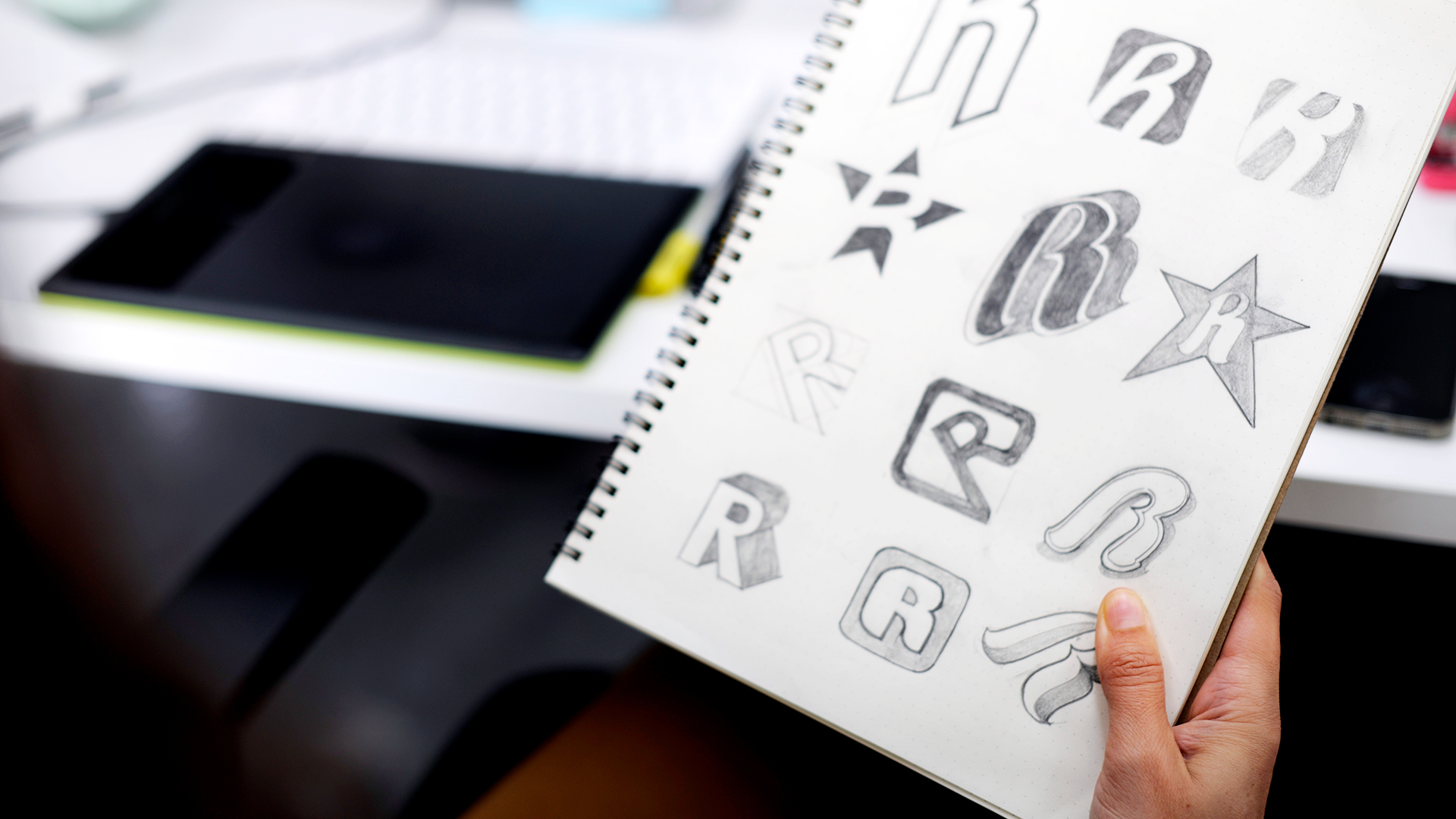
Alright, you’ve got a business to run. You’re juggling your ever growing sales pipeline, working out the every day operations you may not have expected, and (if you’re lucky) a team of experts…along with that ever so innocent intern. Now someone on Instagram is telling you that your logo is make or break for new businesses. You look at your logo and, in a panic, you reach for the user friendly design platform Canva and spend a Saturday afternoon picking fonts and colors. Sure, you come out the other side with something that looks…fine…but you have your logo…yeah.
So, here’s the thing: I’m not going to tell you that using the many DIY tools Canva are junk and that you shouldn’t use them. Honestly, at the moment, they’re better than ever, especially with the added help of AI. But, what I will tell you is that phrases “looks fine” and “does its job” are two very different things. Most business owners don’t find out the difference until it costs them.
I’ve seen both sides…and I have fixed many logos. Let’s walk through what’s actually at stake.
First, let’s be honest about DIY design
Canva, Adobe Express, Looka, Wix Logo Maker, these tools are legitimate. If you’re doing a mock up, testing a business idea, or working with zero budget, there’s nothing wrong with using them as a starting point. A rough logo won’t kill a good business.
Using one of these tools for a logo makes sense when:
- You’re still validating whether the business has legs
- It’s a side project with no plans to scale
- You plan to invest in real branding once revenue justifies it
What a Logo Actually Has to Do
The problem isn’t the tool. The problem is using a “placeholder” logo as if it’s a finished brand. Most people think a logo just needs to look good…that’s about 20% of the job.
A logo, that’s doing it’s job, has to:
Work small.
Your favicon on a browser tab and your sign above the door are the same logo. Most DIY logos fall apart at one extreme or the other.
Able to be one color.
Embroidery on a hat, a stamp on a box, a fax header (yes, still): your logo needs to work in flat black and white. Gradient-heavy Canva logos typically don’t.
Communicate the right feeling quickly.
Before a potential client reads your name, they’ve already formed an impression. Your logo is doing that work whether you like it or not.
Stand apart from your competitors.
If you and three other local businesses in your category all used Canva, there’s a real chance your logos look like cousins. Templates don’t care about your market. This is actually funny to see sometimes.
Has the potential to hold up for 5+ years.
A logo isn’t something you want to redo every 18 months. The good ones age well because they were built on solid principles, not whatever was trending on Canva that month.
Most DIY logos quietly fail two or three of these…some fall prey to all of these. The owner usually doesn’t know until they’re ordering merchandise, building out signage, or handing a business card to someone who matters. The last thing we want is a cease and desist coming our way due to a Canva logo.
The real risks of getting it wrong
This is the part most designers dance around. I’d rather just say it directly.
Rebranding costs more than doing it right the first time
Once a logo is in the wild, it’s everywhere. Business cards, your website, social profiles, signage, email signatures, invoices, and packaging. When you eventually outgrow a DIY logo—and most businesses do—you’re not just paying a designer, you’re paying to update every single touchpoint. As a designer that has updated over 150 whitepapers and eGuides after a rebrand, it takes a while.
Your “unique” logo probably isn’t
Canva’s most popular templates have been used by hundreds of thousands of businesses. When you customize one, you’re starting from a foundation that already exists in the market. A professional designer builds from scratch — with your specific industry, audience, and competitors in mind.
It signals something to the people you want to impress
This one’s uncomfortable to say, but it’s true: people judge professionalism by presentation. A polished brand tells prospective clients you take your business seriously. A generic or poorly constructed logo raises questions, not about your skills, but about whether you’re worth the price you’re asking. It can be a difference of a $5 job and $5,000 one.
AI logo generators have a file format problem
Many AI-generated logos output low-resolution PNGs or locked file formats. When you need a scalable vector file for a sign shop, a printer, or an embroiderer, you’re stuck. A professional deliverable always includes proper vector files (SVG, EPS, AI) that work everywhere, at any size.
What you’re actually paying for
A lot of business owners think hiring a designer means paying someone to “draw them a picture.” That’s not what’s happening, there is a lot more to it.
When I’m tasked to create a brand, the logo is usually the face of the brand, but the process in developing the logo is the true star. For example, a brand design process looks something like this:
Relevant research.
Your industry, your competitors, your target audience, and what visual cues already exist in your space. The goal is to be similar yet different, while avoiding to accidentally blend in.
Strategic identity.
Color psychology, typeface, and symbol style; every decision has a reason behind it. Not “I liked how this looked,” but “this communicates trust/energy/precision to this specific audience.”
Design and execution.
A complete package of vector files and jpg/png. This includes: full color treatment, one-color, reversed, horizontal (standard), stacked, and favicon. Everything you’ll actually need across every surface.
The longevity goal.
If done right, the logo will be built to last, not one that’ll look dated in two years because it was based on this month’s Canva trends.
So, is a DIY logo ever the right call?
As much as I would love to design your brand, I have to give you a straight answer.
DIY is a great, reasonable short-term choice if you’re still figuring out your niche, or a placeholder if you will. No point in investing in a legit brand until you get some traction. With that said though, don’t wait too long or do a giant branding imitative prematurely as these could cost you more…and not just in paying for a designer to fix everything. Credibility in your space may cause you to loose potential clients, and may even cause your company to feel more like an Etsy shop instead of a brand worth visiting (there’s nothing wrong with Etsy shops…phew, almost had the Etsy crowd after me).
So, what’s next?
Your next step is to assess your logo, and maybe your brand. Is it the best it can be? Was it designed in Canva? Review even non-DYI logos as these also can have issues similar to Canva logos of being “in the trend” of the past. After the assessment, if the logo is “meh” get in touch with a designer that fits your style preference.
Your logo, in the end, is for you and your business. Make it shine.